 19 Levan Mikeladze St.
 info@akhalimzera.ge
Glaucoma: Understanding the "Silent Thief of Sight"
Glaucoma: Understanding the "Silent Thief of Sight"
Glaucoma is a group of ocular diseases characterized by a progressive course that may ultimately result in blindness. The term originates from ancient Greek and translates as “light blue,” “azure,” or “bluish-green.” The condition derives its name from the cloudy, bluish discoloration of the cornea that appears in the late stages of the disease. Among ophthalmic disorders, glaucoma is considered one of the leading causes of blindness worldwide.
Glaucoma is defined by three principal features (Graefe’s triad):
-
Elevated intraocular pressure (IOP)
-
Characteristic changes of the optic nerve
-
Progressive constriction of the visual field
Etiology and Pathogenesis
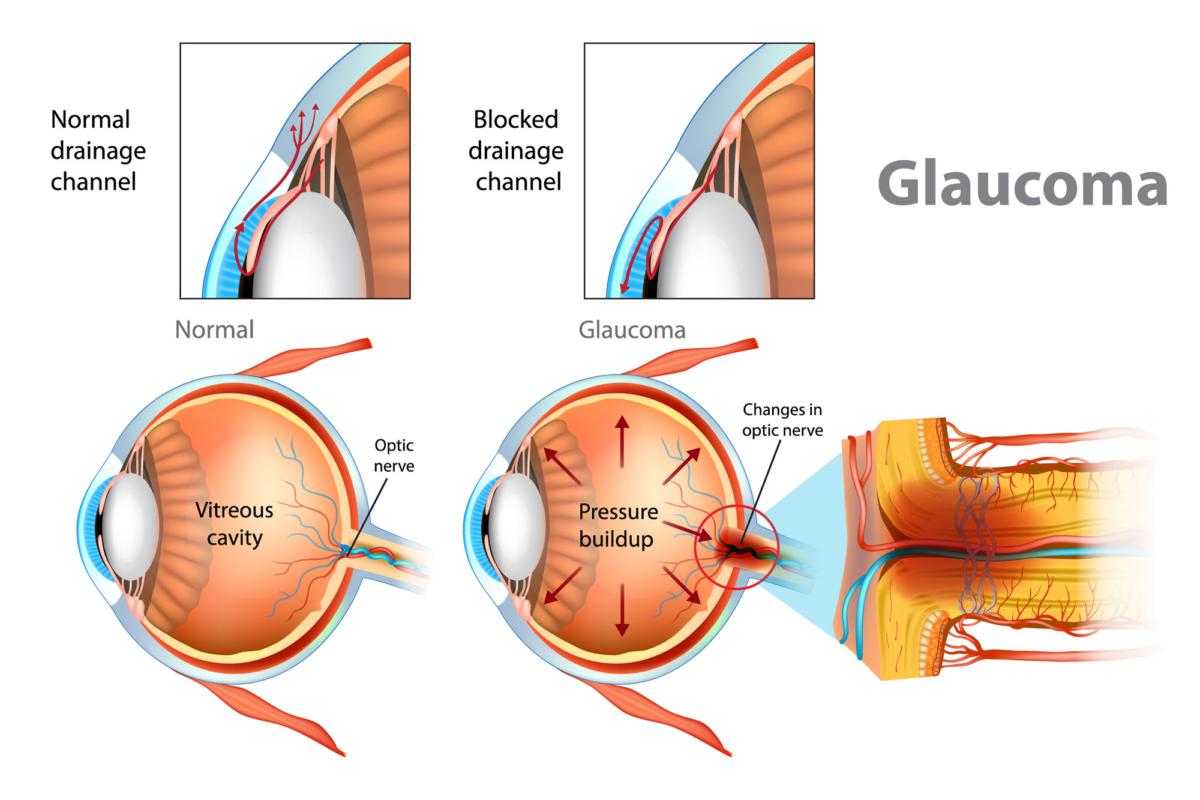
Pathological processes in glaucoma develop as a consequence of increased intraocular pressure. This occurs when the balance between aqueous humor production and outflow in the anterior chamber of the eye is disrupted. Under normal conditions, the regulation of aqueous humor is maintained by the ocular drainage system. Impairment of this system leads to fluid accumulation in the anterior chamber and excessive elevation of intraocular pressure. As a result, the optic nerve becomes compressed and undergoes gradual atrophy.
Shutterstock
Risk Factors
The development of glaucoma is associated with the following risk factors:
-
Age: Over 45 years.
-
Genetic predisposition: Family history of the condition.
-
High-degree myopia: Severe nearsightedness.
-
Metabolic disorders: Such as diabetes mellitus.
-
Arterial hypertension: High blood pressure.
-
Inflammatory eye diseases: Including keratitis, blepharitis, conjunctivitis, and uveitis.
Early Diagnosis
Early diagnosis of glaucoma is challenging because, in its initial stages, the disease is largely asymptomatic. According to current data, up to six years may elapse between the onset of the disease and the appearance of the first clinical signs. During this period, peripheral vision is progressively impaired, while central vision often remains normal for a prolonged time. Therefore, early detection is crucial for a favorable prognosis.
Acute Angle-Closure Glaucoma: An Ophthalmic Emergency
It is important to highlight the sudden symptoms that may occur in angle-closure glaucoma. This condition constitutes an ophthalmic emergency and requires immediate medical attention. It is characterized by:
-
Severe pain: Intense, unbearable ocular pain that may radiate to the temple, forehead, or jaw.
-
Visual disturbances: Perception of a “milky fog,” halos (rainbow-colored rings) around light sources, and decreased visual acuity.
-
External signs: Ocular redness, a dilated pupil unresponsive to light, and corneal edema (clouding).
-
Sensation of a “hard eye”: Upon palpation, the eyeball feels firm and tense.
Urgent Notice: In the presence of these symptoms, urgent consultation with an ophthalmologist or immediate emergency medical assistance is mandatory, as delayed treatment may result in irreversible blindness.