 19 Levan Mikeladze St.
 info@akhalimzera.ge
Children’s Eye Health: Why Pediatric Eye Exams Matter
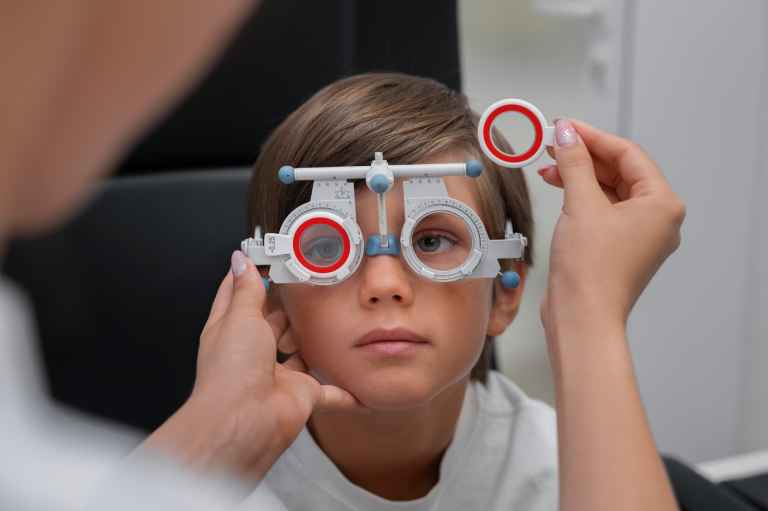
Children’s Eye Health: Why Pediatric Eye Exams Matter
1. The Fundamental Role of Early Detection
“Children’s Eye Health: Why Pediatric Eye Exams Matter” focuses on the vital importance of early eye examinations in a child's overall life. Since vision is a key component of the learning process, detecting vision problems early is essential, as these issues can significantly affect a child's development and learning abilities. Professional exams ensure that the visual system is functioning correctly to support academic and social success.
2. Identifying Conditions Through Timely Screening
The article explains how timely screening acts as a proactive measure to help identify specific visual conditions that might otherwise go unnoticed. Key conditions identified during these exams include:
- Lazy Eye (Amblyopia): A condition where the brain favors one eye over the other, leading to reduced vision in the weaker eye. Early detection allows for successful treatment while the visual pathways are still developing.
- Crossed Eyes (Strabismus): Misalignment of the eyes that prevents them from working together as a pair. Identifying this early is crucial for maintaining proper depth perception and binocular vision.
- Refractive Errors: Such as nearsightedness, farsightedness, and astigmatism. Identifying these ensures the child receives the correct prescription for healthy visual input.
3. Ocular Coordination and Functional Visual Skills
Beyond basic visual acuity, pediatric exams evaluate how well the eyes work together as a team (coordination) and how effectively they focus on near objects. Many children struggle with reading not because they cannot see the letters, but because their eyes fail to track text smoothly or focus accurately. Identifying these functional issues is a key part of a comprehensive pediatric exam.
4. Ensuring Proper Treatment and Healthy Development
A comprehensive exam is the first step in ensuring proper treatment, which is the foundation for healthy visual development. Corrective measures, whether through glasses, patching, or therapy, are most effective when initiated at a young age, setting the stage for long-term well-being.
5. Warning Signs and Clinical Guidelines
Parents should remain vigilant for behavioral signs such as:
-
Squinting or tilting the head to focus;
-
Sitting too close to screens;
-
Frequent eye rubbing.
Clinical Guidelines: It is recommended that a child’s first comprehensive exam take place between 6 and 12 months of age, followed by mandatory check-ups at ages 3 and 5 to ensure they are ready for school.
author: Ana Tsibadze